Vanishing Congregations: The Collapse of Iraq's Ancient Christian World and Its Consequences for American Policy
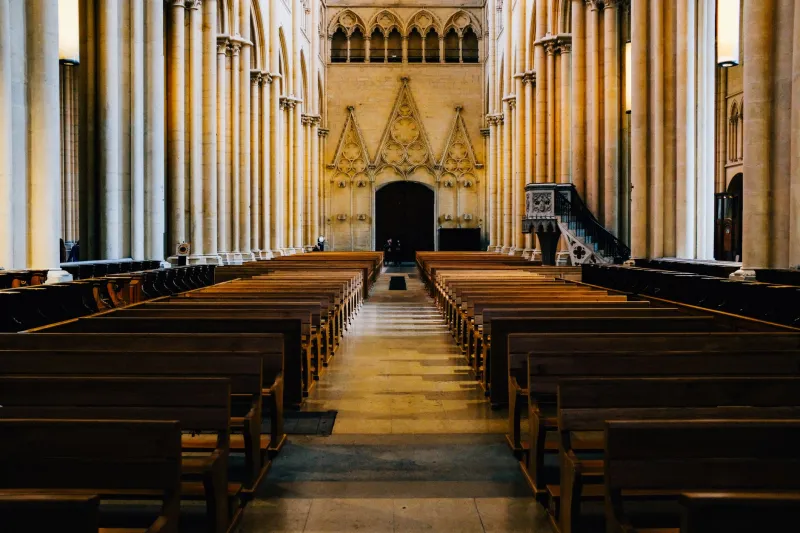
In the town of Alqosh, perched on a rocky ridge in northern Iraq's Nineveh Plains, the Church of Our Lady of the Seeds has stood for centuries. Its stone walls have absorbed prayers in Aramaic — the language scholars believe Jesus of Nazareth spoke — and its courtyard has hosted generations of births, marriages, and funerals. Today, the congregation that fills it on Sundays is a fraction of what it once was. Young families have left. Elderly parishioners die without successors. The priest speaks of his flock not with pastoral confidence but with the quiet grief of a man watching something irreplaceable dissolve.
Alqosh is not an isolated case. It is a microcosm of a demographic catastrophe unfolding across Iraq with a speed and finality that has received surprisingly little sustained attention in Washington's foreign policy circles.
A Population in Freefall
At the time of the 2003 US-led invasion, Iraq's Christian population was estimated at approximately 1.4 million people — roughly 6 percent of the country's total population. Today, credible estimates place that number somewhere between 250,000 and 300,000. Some assessments are grimmer still. That represents a population decline of nearly 80 percent in just over two decades, a collapse without parallel among the region's minority communities.
The communities in question are not recent arrivals to the region. Chaldean Catholics, Assyrian Church of the East members, Syriac Orthodox Christians, and smaller denominations trace their presence in Mesopotamia to the first and second centuries of the Common Era. They predate the Arab conquest of Iraq by roughly six hundred years. Their liturgical traditions, their architectural heritage, and their languages constitute living links to a civilization that most Americans encounter only in history textbooks.
What is erasing them is not a single catastrophe but an accumulation of pressures that have made ordinary life untenable.
The Machinery of Departure
The 2003 invasion removed Saddam Hussein's government, which, for all its brutality, had provided a measure of secular protection to minority communities. What followed was a sectarian reorganization of Iraqi society that left Christians without a meaningful patron. Targeted church bombings began in 2004. Kidnappings for ransom, directed specifically at Christian business owners and professionals, became routine in Baghdad's neighborhoods. By 2008, entire Christian quarters of the capital had been emptied through a combination of murder and intimidation.
The rise of the Islamic State between 2013 and 2017 delivered the most visible blow. When ISIS seized Mosul in June 2014, it issued an ultimatum to the city's remaining Christians: convert, pay a tax, or face execution. Within days, a Christian community that had existed in Mosul for nearly two millennia was gone. The ancient monasteries of the Nineveh Plains were looted and vandalized. Mar Behnam, Rabban Hormizd, Mar Mattai — monasteries that had survived the medieval period — were desecrated within weeks.
The liberation of these areas by Kurdish Peshmerga forces and Iraqi government troops after 2016 did not reverse the exodus. Many displaced Christians who attempted to return found their homes occupied, their property claims disputed, and the local political environment hostile. Armed groups affiliated with Iran-backed militias, which now exercise considerable influence across the Nineveh Plains, have been accused by human rights organizations of pressuring Christian landowners and manipulating local governance structures to consolidate territorial control.
The State's Conspicuous Absence
Iraq's constitution formally guarantees the rights of religious minorities. In practice, the mechanisms for enforcing those guarantees have never been adequately constructed. The national government in Baghdad has periodically issued statements affirming its commitment to protecting Christians and other minorities, but the institutional follow-through has been negligible.
Christian political representation in the Iraqi parliament, though constitutionally reserved through a quota system, has delivered little tangible protection. Community leaders describe a political environment in which their allocated seats function as symbolic gestures rather than as genuine avenues of influence. The militias that dominate much of the territory where Christians historically lived operate with a degree of impunity that Baghdad has shown little appetite to challenge.
Economic deterioration compounds the security picture. Iraq's chronic unemployment, its dysfunctional public services, and its dependence on oil revenues that flow through corrupt distribution networks have left minority communities — who tend to be disproportionately represented in private business and professional sectors — particularly exposed. Without the economic resilience that comes from state employment or militia affiliation, Christian families find emigration not merely attractive but rational.
Washington's Overlooked Obligation
The United States bears a particular relationship to this crisis that its policymakers have been reluctant to fully acknowledge. The 2003 invasion dismantled the political order that, however imperfectly, had contained the sectarian forces now driving Christian emigration. American decisions about de-Baathification, about the disbanding of the Iraqi army, and about the pace of political reconstruction created the conditions in which minority communities became uniquely vulnerable.
Congress has periodically engaged with the issue. The Iraq and Syria Genocide Relief and Accountability Act of 2018 directed the State Department to prioritize aid to persecuted religious minorities in the region, and the United States Agency for International Development has channeled funds toward reconstruction projects in the Nineveh Plains. Religious freedom advocates, including the US Commission on International Religious Freedom, have consistently flagged the deteriorating conditions facing Iraqi Christians in their annual reports.
Yet these efforts have remained peripheral to the main architecture of American Iraq policy, which has been organized around counterterrorism objectives, managing Iranian influence, and maintaining access to Iraqi oil infrastructure. The demographic collapse of Iraq's Christian communities has not registered as a first-order strategic concern in the way that, for example, Kurdish political autonomy or Shia militia activity has.
This is a miscalculation on multiple levels. Iraq's religious diversity has historically functioned as a stabilizing force, providing social complexity that resists the consolidation of any single sectarian vision of the state. Its erosion strengthens the hand of those — including Iranian-aligned political actors — who benefit from a more homogeneous and controllable political landscape. A country emptied of its minorities is, paradoxically, a country more susceptible to the kind of extremist consolidation that American policy has consistently sought to prevent.
What Remains and What May Yet Be Saved
The situation is not without residual hope, though that hope requires a degree of honesty that has been largely absent from official discourse. Communities in the Nineveh Plains have shown a stubborn resilience. Some diaspora Iraqis, particularly in communities in Michigan, California, and Sweden, maintain emotional and financial ties to ancestral villages. Younger activists within these communities are increasingly sophisticated in their use of international legal frameworks and media advocacy.
What they consistently say they need is not charity but reliable security, enforceable property rights, and a political environment in which their presence is treated as an asset rather than an inconvenience. These are things that neither Baghdad nor Washington has yet found the political will to provide in any sustained way.
The churches of the Nineveh Plains are still standing. Whether they will still have congregations in another generation is a question that American policymakers, if they are serious about the values they invoke when discussing the Middle East, can no longer afford to treat as someone else's problem.