Neither Ally Nor Enemy: How Iraq's Militia Superstructure Is Quietly Redrawing the Middle East
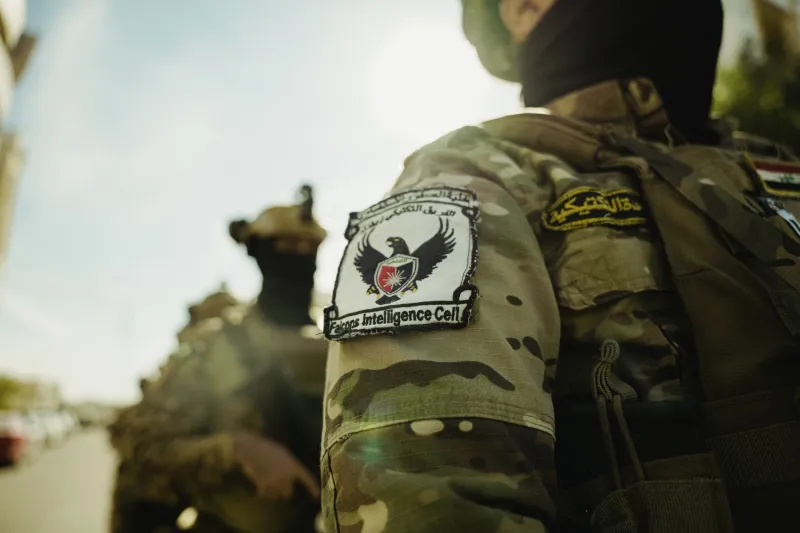
In the summer of 2014, as the black flags of the Islamic State swept across Mosul and panic consumed Baghdad, the Iraqi state did something it had never quite managed before: it called on its citizens to take up arms, and they answered by the tens of thousands. Grand Ayatollah Ali al-Sistani's fatwa was the spark, but what ignited was something far more complex than a volunteer defense force. What emerged from that moment of existential crisis was the Popular Mobilization Forces—known in Arabic as al-Hashd al-Sha'abi—a constellation of armed factions that has since grown into one of the most consequential and least understood power structures in the modern Middle East.
More than a decade later, the PMF defies every category American policymakers reach for. It is not quite a terrorist organization, though several of its constituent factions appear on the U.S. Treasury's designated terrorist list. It is not quite a legitimate state institution, though it draws a salary from the Iraqi federal budget and operates under a legal framework enshrined in Iraqi law. It is not quite an Iranian proxy army, though Tehran's influence over its most powerful factions is neither subtle nor disputed. It is, in the most precise sense available, something genuinely new—and that novelty has paralyzed Washington's response for years.
Origins in Crisis, Permanence in Power
Understanding the PMF requires revisiting the conditions that made it possible. The Iraqi Army that collapsed before ISIS in 2014 was not simply outfought; it was hollowed out by years of sectarian patronage appointments, corruption, and the systematic dismantling of professional military culture. When it disintegrated, the vacuum it left was filled not by reformed institutions but by armed networks that had been waiting in the margins of Iraqi politics since the American occupation years.
Many of the factions that rushed to form the PMF's core had deep roots in the post-2003 insurgency period. Groups like Kata'ib Hezbollah and Asa'ib Ahl al-Haq had spent years fighting U.S. forces before repositioning themselves as defenders of the Iraqi state against a common Sunni extremist threat. The rebranding was strategically elegant. Organizations that American soldiers had engaged in deadly combat were now, at least nominally, partners in a shared counterterrorism mission.
By 2016, the Iraqi parliament had formalized the PMF's status, integrating it—on paper—into the national security apparatus. The move granted these factions legal standing, government salaries, and institutional legitimacy without meaningfully subjecting them to state command and control. The result was a force that could claim the protections of a national institution while retaining the operational independence of a non-state actor.
The Iranian Thread
No serious analysis of the PMF can avoid confronting Iran's role in shaping it. Tehran did not create the PMF, but it has invested heavily in cultivating its most powerful components. The Islamic Revolutionary Guard Corps, particularly through its Quds Force, has provided training, weapons, financing, and strategic guidance to key factions. This relationship is not uniform across the PMF's estimated sixty-plus factions—some maintain genuine Iraqi nationalist orientations and resist Iranian direction—but the factions that carry the most military weight are, in most meaningful respects, extensions of Iranian regional strategy.
This matters enormously for American interests. When PMF-affiliated drones struck U.S. bases across Iraq and Syria in recent years, wounding American service members and killing at least three soldiers in the January 2024 attack on Tower 22 in Jordan, the operational fingerprints pointed back through a chain of command that runs through Baghdad and into Tehran. Washington's dilemma was immediate and familiar: retaliate against the factions responsible and risk destabilizing an Iraqi government it needs as a partner, or absorb the attacks and signal that American forces can be struck with limited consequence.
Neither option is acceptable. Neither option is avoidable. That is the trap the PMF has constructed.
Beyond Bullets: Economic and Political Penetration
What makes the PMF genuinely difficult to counter is that its power is not reducible to military capacity. Over the past several years, PMF-affiliated networks have extended their reach into Iraqi economic life with remarkable efficiency. Border crossings, construction contracts, real estate markets, and agricultural supply chains in areas liberated from ISIS have come under varying degrees of PMF influence. In some provinces, the distinction between the militia economy and the legitimate economy has effectively ceased to exist.
The political dimension is equally significant. PMF-linked political parties, operating under the umbrella of the Fatah Alliance, have contested and won seats in Iraq's parliament. While the Alliance's electoral performance declined notably after the 2021 protests, its parliamentary presence remains sufficient to block legislation, influence cabinet formation, and shape budget allocations. The PMF has, in other words, learned to operate across every domain of power simultaneously—a sophistication that renders purely military responses inadequate.
Washington's Recurring Failure of Imagination
American policy toward the PMF has oscillated between two inadequate poles. The first is engagement—treating the PMF as a flawed but manageable element of the Iraqi security architecture, prioritizing the broader U.S.-Iraq relationship and hoping that institutional integration will gradually moderate the most extreme factions. The second is confrontation—designating factions, imposing sanctions, and conducting targeted strikes, accepting the diplomatic costs in Baghdad as the price of deterrence.
Neither approach has produced a coherent strategy. Engagement has consistently underestimated the degree to which Iranian-aligned factions within the PMF regard American presence in Iraq as a strategic threat to be eliminated, not a relationship to be managed. Confrontation has repeatedly underestimated the PMF's ability to absorb pressure, regroup, and exploit Iraqi nationalist sentiment to delegitimize American action.
What has been largely absent is a serious effort to disaggregate the PMF—to identify and strengthen the genuinely Iraqi nationalist factions within it, to work with Baghdad to create real incentives for disarmament and integration, and to develop economic tools capable of competing with the patronage networks that give the PMF its social base. These approaches are harder, slower, and less satisfying than either accommodation or airstrikes. They are also more likely to produce lasting results.
What Expansion Means for the Region
The PMF's influence no longer stops at Iraq's borders. Its factions have fought in Syria alongside Assad regime forces. Its networks maintain relationships with Hezbollah in Lebanon and with Houthi forces in Yemen. The infrastructure of what some analysts call the "axis of resistance" runs, in significant part, through PMF-affiliated commanders and supply lines that originate in Iraqi territory.
For American partners in the Gulf and for Israel, this regional projection of PMF power represents a strategic threat that is both real and difficult to address without Iraqi state cooperation that Baghdad has been unwilling or unable to provide. For Iraq itself, the PMF's cross-border entanglements carry serious risks—of drawing the country into conflicts it cannot control, of inviting retaliatory strikes on Iraqi soil, and of permanently subordinating Iraqi foreign policy to Iranian strategic priorities.
A Problem That Will Not Resolve Itself
The PMF did not emerge from a vacuum, and it will not disappear from one. It is the product of state failure, sectarian mobilization, external intervention, and the systematic destruction of Iraqi institutional capacity over more than two decades. Addressing it seriously requires confronting all of those underlying conditions simultaneously—a task that demands patience, resources, and strategic consistency that American Middle East policy has rarely sustained.
What is clear is that the current ambiguity cannot hold indefinitely. The PMF will continue to expand its economic and political footprint, continue to provide Iran with strategic leverage over Iraqi decision-making, and continue to present American forces in the region with threats that existing policy frameworks are poorly equipped to manage. The question is not whether Washington will eventually need a more coherent approach. The question is how much it will cost to arrive at one.