Baghdad's Restless Generation: The Digital Activists Quietly Rewriting Iraq's Political Future
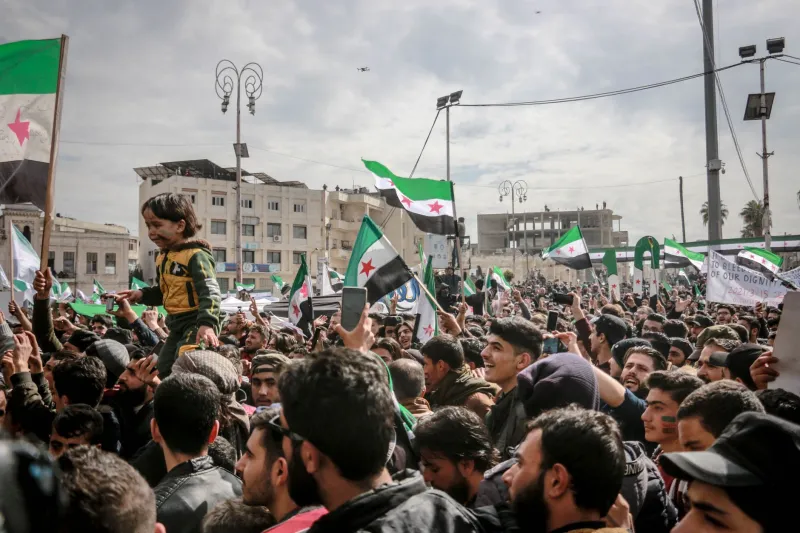
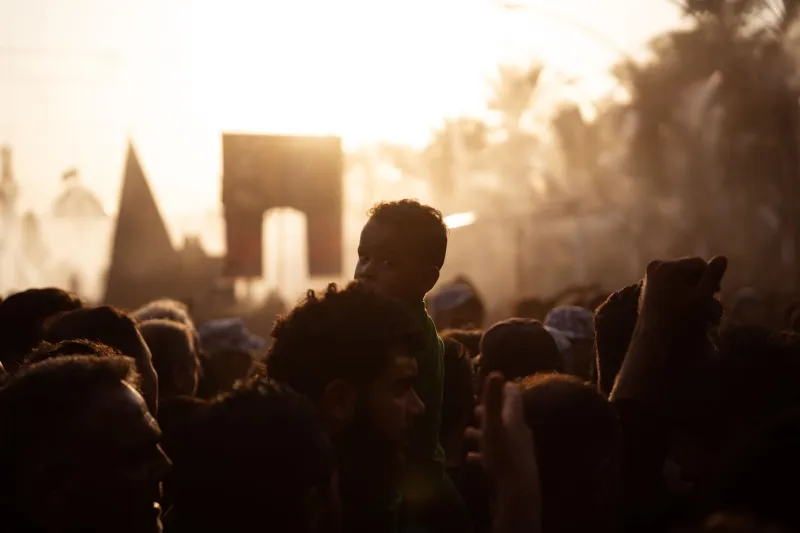
In the autumn of 2019, Baghdad's Tahrir Square became the unlikely stage for one of the Arab world's most significant protest movements in a generation. Tens of thousands of young Iraqis — many of them first-time demonstrators — flooded the capital's streets, demanding jobs, an end to corruption, and a political system that actually served ordinary citizens rather than the sectarian patronage networks that have dominated the country since 2003. Security forces killed hundreds. The international media covered it briefly, then moved on.
What most outside observers failed to notice was who was doing the organizing. It was not trade unions, opposition parties, or clerical networks. It was a loose constellation of young Iraqis — many of them under twenty-five — coordinating through encrypted messaging apps, documenting abuses on social media, and building solidarity structures that existed entirely outside the formal institutions Washington has spent two decades trying to cultivate.
That generation has not gone away. And it is growing more sophisticated.
A Demographic Reality That Defies Easy Categorization
Iraq is one of the youngest countries on earth. Roughly sixty percent of its population is under the age of thirty, and the median age hovers around twenty-one — younger than the median in both the United States and most of its regional neighbors. This is not merely a demographic statistic. It represents a fundamental political reality that Baghdad's ruling class has consistently underestimated and that Washington has almost entirely ignored.
For this generation, the reference points are entirely different from those of their parents. They did not live through the Iran-Iraq War or the Gulf War. Many were children during the American invasion of 2003. What they have known, almost exclusively, is a state defined by dysfunction: rolling power outages in a country sitting atop the world's fifth-largest oil reserves, a public sector bloated with ghost employees while private-sector opportunities remain scarce, and a political class widely perceived as answerable to Tehran, Riyadh, or Washington before it answers to ordinary Iraqis.
Unemployment among Iraqi youth officially stands at around fifteen percent, though independent economists suggest the real figure, accounting for underemployment and workers in the informal economy, is considerably higher. For university graduates, the prospects are particularly bleak. A degree from an Iraqi institution — itself often of questionable quality given years of underfunding — offers little guarantee of meaningful work in a labor market where government jobs are frequently allocated through political connections rather than merit.
Organizing Beyond the Old Structures
What distinguishes Iraq's emerging activist class from previous generations of dissidents is its deliberate rejection of traditional organizational frameworks. Earlier protest movements in Iraq tended to coalesce around established parties, religious institutions, or tribal networks — structures that, whatever their flaws, provided logistical support and some measure of protection. Today's young organizers have largely concluded that those same structures are part of the problem.
Instead, they have built horizontal networks that operate primarily in digital spaces. Telegram channels aggregate news and coordinate demonstrations. Twitter — or X, as it is now formally known — has become a primary vehicle for political commentary and accountability journalism, with young Iraqi users documenting government failures in real time. TikTok, dismissed by many Western analysts as a platform for entertainment rather than politics, has proven a surprisingly effective tool for reaching audiences who distrust formal media outlets.
This technological fluency cuts in multiple directions. It gives young activists the ability to organize rapidly and at scale, bypassing the gatekeepers who have traditionally controlled Iraqi political discourse. But it also makes them vulnerable. The Iraqi government has repeatedly throttled internet access during periods of unrest, and there is credible evidence that state-linked actors monitor social media activity to identify and target prominent voices. Several activists who rose to prominence during the 2019 protests were subsequently assassinated, their killers never identified or prosecuted.
The Demands Are Concrete, Not Revolutionary
One of the persistent misreadings of Iraq's youth movement — both in Baghdad and in Washington — is the assumption that it is primarily ideological, driven by abstract commitments to democracy or Western-style liberalism. The reality is considerably more pragmatic.
Young Iraqi activists tend to organize around specific, material grievances: the absence of reliable electricity, the lack of employment opportunities in the private sector, the impunity enjoyed by corrupt officials, and the government's failure to deliver basic services. When they invoke concepts like accountability or transparency, they are typically referring to concrete demands — an end to the practice of allocating public contracts to politically connected firms, for instance, or the prosecution of officials implicated in the theft of public funds.
This pragmatism is both a strength and a limitation. It makes the movement broadly legible across Iraq's fractious sectarian and ethnic divides; Sunni Arabs in Mosul and Shia Arabs in Basra share the same frustrations about unemployment and service failures. But it also means the movement lacks the kind of unified ideological vision that might translate into durable political organization.
Washington's Persistent Blind Spot
American policy toward Iraq has long been shaped by a relatively narrow set of preoccupations: managing the influence of Iranian-backed militias, maintaining access to Iraqi airspace for counterterrorism operations, and preserving a semblance of stability that allows Washington to claim its post-2003 investment was not entirely wasted. These are legitimate concerns. But they have produced a policy framework almost entirely oriented toward Iraq's elite political actors — prime ministers, militia commanders, Kurdish regional leaders — while systematically ignoring the social forces that are likely to determine the country's trajectory over the next two decades.
American officials in Baghdad interact primarily with a political class that is itself deeply out of touch with the country's youth. The average age of Iraq's Council of Representatives skews considerably older than the population it ostensibly represents. Many senior politicians built their careers in exile during the Saddam era and returned after 2003 with little organic connection to the constituencies they now claim to lead.
The result is a feedback loop in which Washington receives information about Iraqi politics that is systematically skewed toward the concerns of an aging, factionally entrenched elite — precisely the class of actors that Iraq's young activists have identified as the primary obstacle to meaningful change.
What Could Change, and Why It Matters
The trajectory of Iraq's youth movement is genuinely uncertain. It could fragment under sustained government pressure, or it could gradually coalesce into a more organized political force capable of contesting elections and building durable institutions. The October 2021 parliamentary elections offered a modest hint of the latter possibility, with several candidates loosely affiliated with the protest movement winning seats — though the broader electoral system remains structured in ways that favor established parties.
What is less uncertain is that this generation will eventually inherit Iraq. The political calculations that have governed Baghdad for the past two decades — the careful management of sectarian quotas, the distribution of oil revenues through patronage networks, the accommodation of external powers — are already struggling to contain the pressures this generation represents. Those calculations will become increasingly untenable as the demographic weight of young Iraqis grows.
For American policymakers, the lesson is not necessarily to champion Iraq's youth movement as an instrument of U.S. interests — an approach that would almost certainly backfire, given the movement's deep skepticism of foreign interference. It is, rather, to develop a more sophisticated understanding of Iraqi society that extends beyond the elite actors who currently dominate the conversation. The next significant shift in Iraqi politics may well be driven not by a militia commander or a party boss, but by a twenty-three-year-old in Baghdad with a smartphone and a Telegram channel. Washington would do well to start paying attention.