Power Without Prosperity: How Iran's Grip on Iraq Is Failing the People It Claims to Protect
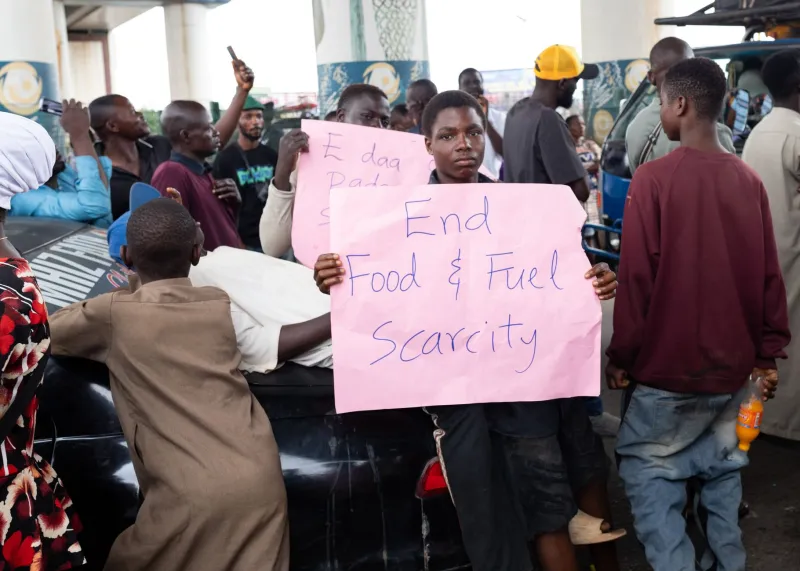
In the summer of 2023, thousands of young Iraqis took to the streets of Basra — not to protest an American military presence, not to denounce Israel, and not to wave the banners of any armed faction. They were protesting the heat. Temperatures had crested 125 degrees Fahrenheit, the electrical grid had collapsed for the twelfth time that season, and the taps had run dry in a city that sits atop some of the world's most valuable oil reserves. Basra, a city that once rivaled Beirut as a cultural and commercial hub of the Arab world, has become a monument to mismanagement.
What makes this collapse particularly striking is that Basra is, in many respects, the heartland of Iranian influence in Iraq. Its political class is dominated by factions with deep ties to Tehran. Its security landscape is shaped by Iran-aligned militia networks operating under the Popular Mobilization Forces umbrella. And yet, by virtually every measurable standard — youth unemployment, access to clean water, per capita income, quality of public services — the city is worse off today than it was two decades ago.
This is the central contradiction of what analysts often call the Shia Crescent: Iran has achieved extraordinary strategic penetration of Iraqi political and military life, but that penetration has delivered almost nothing of material value to the Iraqi citizens living beneath it.
The Architecture of Influence
To understand why Tehran's footprint in Iraq has grown so large, one must appreciate the conditions that made that growth possible. The 2003 U.S. invasion dismantled the Baathist state virtually overnight, leaving a power vacuum that Iran — sharing a 900-mile border with Iraq and harboring decades of institutional relationships with Iraq's Shia religious networks — was uniquely positioned to fill.
Over the subsequent two decades, Iran cultivated a layered system of influence. Politically, it backed a rotating cast of Shia parties, most notably factions within the Islamic Supreme Council of Iraq and, later, networks tied to figures like Nouri al-Maliki and Hadi al-Amiri. Militarily, it armed, trained, and financed what became the Popular Mobilization Forces, a constellation of paramilitary groups that now number over 100,000 fighters formally integrated — at least on paper — into the Iraqi state security apparatus. Economically, Iranian goods flooded Iraqi markets, and cross-border trade became a lifeline for Iranian exporters evading U.S. sanctions.
The result, as one Western diplomat in Baghdad described it privately, is a state within a state — one that answers less to the Iraqi parliament than to the Revolutionary Guards' Quds Force.
Strategic Gain, Civic Loss
Here is where the paradox sharpens. Iran's strategic objectives in Iraq have been largely achieved. Baghdad does not host a U.S. military base in any permanent capacity. Iraqi foreign policy rarely contradicts Iranian interests at the United Nations or the Arab League. American sanctions on Tehran are routinely circumvented through Iraqi financial channels — a reality that has drawn repeated U.S. Treasury Department warnings and, in some cases, sanctions against Iraqi banks.
But for the 42 million Iraqis living through this arrangement, the dividends are invisible. The country's youth unemployment rate hovers near 25 percent, with some estimates placing it considerably higher among Iraqis between the ages of 18 and 30. Iraq's Transparency International corruption index ranking places it among the worst-governed nations on earth. Infrastructure investment has been so chronically underfunded that the World Bank estimates Iraq needs upward of $88 billion simply to restore basic services to pre-2003 levels.
Critically, Iran has shown little interest in filling this gap. Unlike China, which has negotiated sweeping oil-for-infrastructure deals with Baghdad, or even Gulf states that periodically invest in Iraqi reconstruction projects, Tehran's economic relationship with Iraq is largely extractive. Iranian exports — from food products to construction materials to electricity — flow into Iraq, generating hard currency for an Iranian economy starved of it by sanctions. What flows back in the other direction is not investment capital or development expertise. It is political obligation.
The China and Russia Factor
While Washington has spent the better part of twenty years focused on countering Iranian influence in Iraq, two other actors have been quietly repositioning themselves. China's 2019 oil-for-reconstruction framework with Baghdad — though imperfectly implemented — reflects a strategic patience that neither the U.S. nor Iran has demonstrated. Chinese firms are involved in oil field development in southern Iraq, telecommunications infrastructure, and early-stage discussions about port development at Faw, on the Persian Gulf.
Russia, meanwhile, has expanded its footprint through arms sales and energy sector partnerships, positioning Lukoil and other Russian energy firms as key players in Iraqi oil development even as Western companies have grown more cautious.
For American policymakers, this triangulation presents a strategic dilemma that has no clean answer. The U.S. cannot openly compete with China for influence in a country where its own military presence is deeply unpopular. It cannot simply pressure Baghdad to distance itself from Tehran without offering a credible alternative security architecture. And it cannot ignore the reality that the economic vacuum created partly by its own post-invasion mismanagement has been filled by actors whose long-term interests are fundamentally at odds with Washington's.
What Iraqis Actually Want
Perhaps the most underappreciated dimension of this story is what ordinary Iraqis themselves are saying — loudly and consistently — when given the opportunity. The 2019 Tishreen protest movement, which drew millions of demonstrators into the streets across central and southern Iraq, was notable precisely because it directed its anger not at the United States or Israel, but at the Iranian-aligned political class that had governed Iraq since 2005. Protesters burned Iranian consulates. They chanted against militia commanders. They demanded, above all else, jobs, electricity, and a government that answered to citizens rather than to foreign patrons.
That movement was eventually suppressed through a combination of militia violence — hundreds of protesters were killed — and political co-optation. But the underlying frustrations it expressed have not disappeared. They have merely gone underground, fermenting in a generation of Iraqis who have known nothing but war, occupation, and institutional failure.
A Liability Disguised as an Asset
For Tehran, the uncomfortable truth may be that its dominance over Iraqi political life is becoming a strategic liability rather than an asset. A destabilized, economically hollowed-out Iraq generates refugees, cross-border instability, and popular resentment that increasingly targets Iran-aligned factions. It also creates openings for ISIS reconstitution — a threat that, whatever its other disagreements with Baghdad, Iran cannot afford to ignore.
For Washington, the lesson is more pointed. Two decades of military intervention, political engineering, and sanctions pressure have not produced a stable, prosperous, or genuinely sovereign Iraq. What they have produced is a country where Iranian influence is entrenched, Chinese investment is expanding, and a young population — the majority of Iraqis are under 25 — is growing increasingly radicalized not by religious ideology, but by economic despair.
The Shia Crescent, it turns out, is less a corridor of power than a corridor of neglect. And the people paying the price for that neglect are not in Washington, Tehran, or Beijing. They are in Basra, sweating through another summer without electricity, wondering whether anyone in power is listening.