Caught Between Erbil and Baghdad: Washington's Long Struggle to Define Its Kurdish Policy
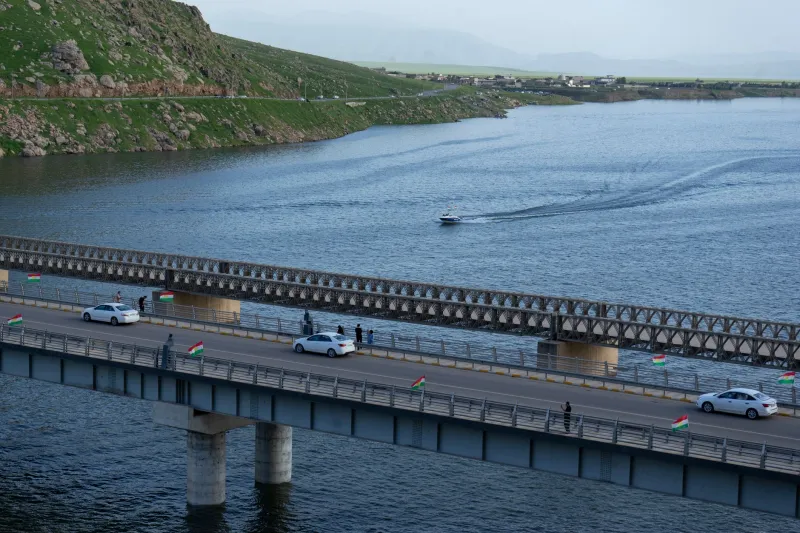
For anyone watching American foreign policy in the Middle East, few relationships illustrate strategic ambivalence quite as vividly as Washington's dealings with the Kurdistan Region of Iraq. The United States has, at various points in recent history, armed Kurdish fighters, celebrated Kurdish democratic governance, quietly discouraged Kurdish independence, and then watched helplessly as the consequences of that inconsistency rippled through Baghdad's fragile political landscape. The result is a policy record that satisfies almost no one — and one that continues to shape, often harmfully, the internal dynamics of the Iraqi state.
A Partnership Born in Conflict, Complicated by Ambition
The modern foundation of the US-Kurdish relationship in Iraq was laid in the aftermath of the 1991 Gulf War, when American-enforced no-fly zones provided the breathing room for Kurdish political institutions to take root in northern Iraq. That arrangement, imperfect and never formally codified, gave birth to what would eventually become the Kurdistan Regional Government, or KRG, headquartered in Erbil.
When the 2003 invasion toppled Saddam Hussein, Kurdish Peshmerga forces fought alongside American troops with considerable effectiveness. That battlefield partnership generated enormous goodwill in Washington. Kurdish leaders, particularly figures like Masoud Barzani and Jalal Talabani, became familiar faces in American policy circles. Talabani would go on to serve as Iraq's first post-Saddam president — a symbolic marker of Kurdish integration into the new Iraqi order.
Yet integration was never quite the right word. From the outset, Kurdish political elites harbored aspirations that extended well beyond a seat at Baghdad's table. The question of Kirkuk — an oil-rich, ethnically mixed city claimed by both the KRG and the Iraqi federal government — remained a festering wound that no American administration proved willing or able to close.
The 2017 Referendum and Washington's Defining Moment
The clearest illustration of Washington's Kurdish policy contradiction arrived in September 2017, when the KRG held an independence referendum that produced an overwhelming vote in favor of statehood. The timing was telling: this came just as Iraqi and Kurdish forces, both backed by American support, had spent years fighting side by side against the Islamic State.
Washington's response was swift and unambiguous — and it stunned many Kurdish officials who believed their sacrifices had earned them a degree of American backing. The State Department, the Pentagon, and the White House all publicly opposed the referendum, warning that it threatened regional stability. When Baghdad moved militarily to retake Kirkuk from Kurdish control in the weeks that followed, the United States stood aside.
For Kurdish leaders, this felt like betrayal. For American strategists, it was a calculated, if painful, choice: a fractured Iraq posed far greater risks to regional stability than disappointed Kurdish nationalists. But the episode exposed just how transactional Washington's commitment to Kurdish self-determination had always been. The Kurds had been useful partners in the fight against the Islamic State. When their political ambitions collided with American interests in a unified Iraq, those ambitions were quietly shelved.
The Structural Dilemma Washington Won't Resolve
The fundamental problem is that American interests in Iraq are genuinely contradictory, and no administration has found a durable framework for managing that contradiction. On one hand, Washington values the KRG as a relatively stable, pro-Western enclave in a volatile region. Erbil hosts significant American military and intelligence assets. Kurdish governance, while imperfect, compares favorably to much of what Baghdad produces. American energy companies operate in the Kurdistan Region, and the KRG has cultivated a reputation as a reliable partner.
On the other hand, a strong and autonomous Kurdistan creates persistent headaches for the Iraqi federal government, which Washington simultaneously depends on to anchor regional security, resist Iranian influence, and maintain the post-2003 political architecture that American blood and treasure helped construct. Every concession to Kurdish autonomy is read in Baghdad as a signal that Washington is willing to tolerate, or even encourage, centrifugal forces within the Iraqi state.
This tension is not merely theoretical. Disputes over oil revenue sharing between Erbil and Baghdad have repeatedly paralyzed Iraqi federal budgeting. Kurdish control of certain territories remains legally unresolved under Article 140 of the Iraqi constitution — a provision that was supposed to be implemented by 2007 and has been effectively frozen ever since. American diplomats have periodically attempted to mediate these disputes, but without sustained political will in Washington, such efforts tend to produce process rather than resolution.
Iran's Shadow Over the Kurdish Question
Any honest analysis of the Kurdish-Baghdad dynamic must account for Iranian influence, which has grown considerably since 2003. Tehran has developed deep ties with Shia political factions in Baghdad, and it views Kurdish autonomy with a mixture of strategic calculation and genuine concern — Iran has its own restive Kurdish population and has no interest in seeing a successful Kurdish independence movement emerge next door.
For Washington, the Kurdish question therefore sits at the intersection of two of its most pressing regional concerns: managing Iraq's internal coherence and countering Iranian influence. The problem is that these objectives sometimes pull in opposite directions. A stronger KRG might check Iranian power in northern Iraq, but it also risks deepening the fractures in the Iraqi state that Tehran has historically exploited. American policymakers have rarely articulated a coherent position on how to balance these competing pressures.
What a Coherent Policy Might Actually Look Like
American analysts and former diplomats have long debated whether Washington needs a more explicit strategic commitment to Kurdish autonomy, a firmer insistence on constitutional compliance from both Erbil and Baghdad, or simply more consistent diplomatic engagement with the underlying disputes. Each approach carries risks.
What seems clear, however, is that the current posture — treating the KRG as a convenient security partner while avoiding any definitive position on its political future — is not cost-free. It breeds resentment in Erbil, suspicion in Baghdad, and a broader perception across the region that American commitments are contingent and reversible.
For Iraqi politics specifically, Washington's ambiguity on the Kurdish question contributes to a climate in which fundamental constitutional arrangements remain perpetually contested. That uncertainty makes it harder for Iraqi governments to govern effectively, harder for investors to commit capital, and harder for ordinary Iraqis — Kurdish or otherwise — to plan their futures.
An Unfinished Chapter
The Kurdish question in Iraq is sometimes described in Washington as a problem without a solution, a geopolitical knot too tangled to unravel. That framing, while understandable, tends to substitute fatalism for analysis. The relationship between Erbil and Baghdad is difficult, but it is not intractable. What it requires is an American policy that is honest about its priorities, consistent in its commitments, and willing to invest the diplomatic energy necessary to help Iraq's competing power centers find durable arrangements.
Until Washington decides what it actually wants from both the KRG and the Iraqi federal government — and is prepared to say so clearly — the Kurdish question will remain exactly what it has been for the better part of three decades: America's unfinished business in the heart of the Middle East.