Beneath the Surface: How Iraq's Informal Trade Networks Are Quietly Defeating Washington's Sanctions Architecture
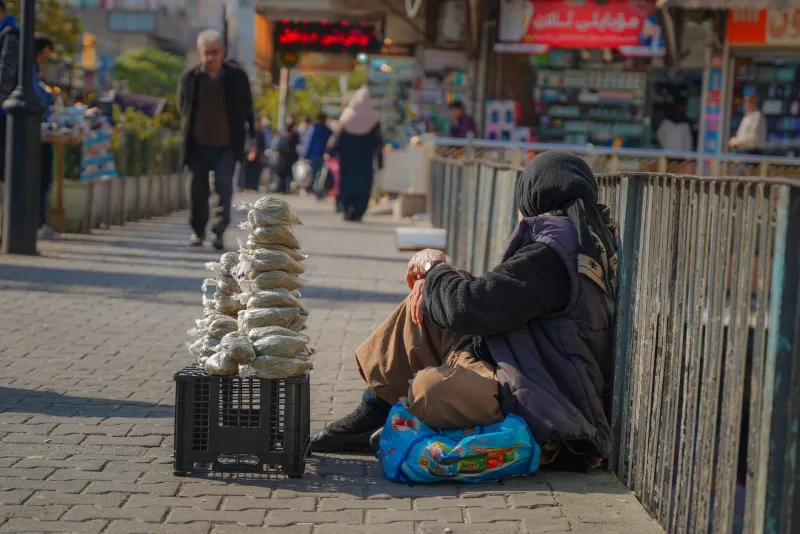
On any given morning at the Mandawi commercial district in central Baghdad, traders move through narrow corridors stacked floor to ceiling with electronics, pharmaceuticals, household appliances, and industrial components. Some of these goods carry familiar Western brand names. Others bear no markings at all. Few, if any, passed through a formal customs declaration. Most arrived through channels that exist entirely outside the reach of Iraqi tax authorities — and well beyond the visibility of American sanctions enforcement agencies.
This is not an anomaly. It is the system.
Iraq's informal economy — encompassing smuggling networks, unregulated currency exchanges, hawala money transfers, and politically brokered trade arrangements — has matured over three decades of sanctions, war, and institutional collapse into something that now functions with remarkable coherence. Economists who study the region estimate that the informal sector accounts for anywhere between 35 and 55 percent of Iraq's non-oil economic activity. That range itself is telling: the uncertainty reflects how deliberately opaque these networks have become.
A Financial Architecture Built on Necessity
The roots of Iraq's shadow economy run deep. The United Nations sanctions regime imposed after Saddam Hussein's 1990 invasion of Kuwait forced Iraqi merchants and government officials to develop creative workarounds for basic commercial needs. The Oil-for-Food Program, intended as a humanitarian relief mechanism, became instead a masterclass in institutionalized corruption — one that enriched political insiders, embedded smuggling networks into the country's commercial DNA, and normalized the blurring of state and illicit enterprise.
The 2003 US-led invasion dismantled the Iraqi state without replacing its regulatory functions. Border controls collapsed. Customs agencies were gutted. The Coalition Provisional Authority, in its urgency to liberalize the Iraqi economy, inadvertently created a vacuum that informal traders — many with ties to armed factions — were extraordinarily well positioned to fill.
Two decades later, those networks have not merely survived. They have consolidated.
Today, goods originating in Iran, Turkey, China, and Gulf states move across Iraq's borders through a layered system of tribal intermediaries, militia-affiliated transport companies, and corrupt customs officials who operate less as law enforcement agents than as toll collectors for the shadow trade. Fuel, construction materials, agricultural products, and consumer electronics flow inward. Iraqi dinars, dollar-denominated cash, and — critically — access to the US financial system flow outward.
The Dollar Drain and the Sanctions Loophole
For American policymakers, the most consequential dimension of Iraq's informal economy is its role in sanctions evasion — particularly as it relates to Iran.
Iraq is one of the few countries in the world that maintains deep economic ties with both the United States and Iran simultaneously. Baghdad depends on Iranian natural gas and electricity to keep its power grid functional. It also depends on US authorization to access dollar reserves held at the Federal Reserve Bank of New York. This structural dependency has created an extraordinary arbitrage opportunity that well-connected Iraqi financial actors have exploited with considerable sophistication.
The mechanism works roughly as follows: Iraqi banks — many of them privately owned by figures with documented ties to Iranian-backed political factions — access dollars through Iraq's Central Bank currency auction, ostensibly to finance legitimate imports. Those dollars are then transferred through a network of front companies and informal exchange houses, ultimately reaching Iranian commercial and government entities that are explicitly prohibited from accessing the US financial system.
The US Treasury Department has sanctioned dozens of Iraqi banks and exchange houses in recent years in an attempt to close this channel. The results have been mixed at best. For every institution blacklisted, new intermediaries emerge. The networks adapt faster than enforcement mechanisms can respond, in part because they are embedded within Iraq's legitimate political economy — not separate from it.
Militia Economics and the Political Dividend
What makes Iraq's shadow trade particularly resistant to external pressure is the degree to which it has been absorbed into the country's formal political structure.
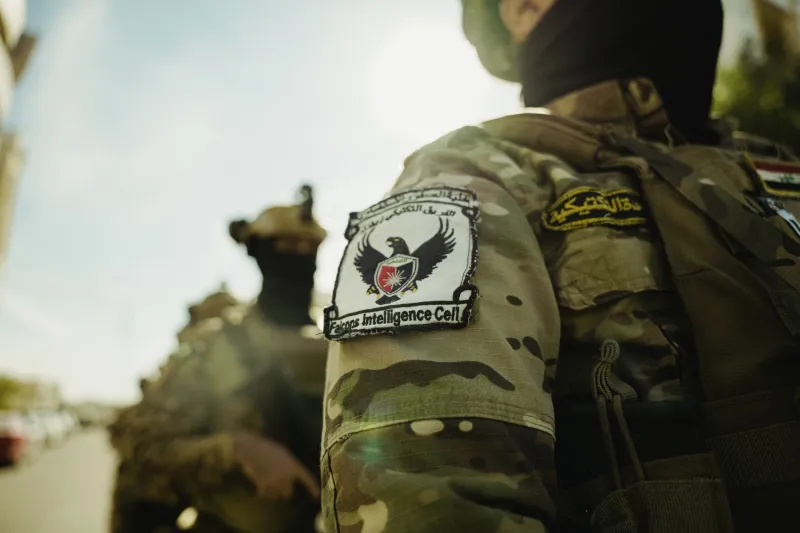
Several of the most powerful factions within Iraq's Coordination Framework — the Shia political alliance that dominates the current government — derive substantial revenue from border crossings, port operations, and informal trade routes that they effectively control through affiliated armed groups. The Imam Ali Brigades, Kataib Hezbollah, and other Iran-aligned factions have developed economic portfolios that extend well beyond weapons and security services. They operate trucking companies, currency exchange businesses, and import-export firms that provide both revenue and political leverage.
This means that any serious effort to formalize Iraq's economy and close its sanctions loopholes would directly threaten the financial interests of actors who hold genuine veto power over Iraqi governance. Prime ministers have learned this lesson at considerable cost. Reformist technocrats appointed to positions at the Trade Ministry or the Central Bank frequently find their initiatives stalled, reversed, or simply ignored by a bureaucracy that answers to different principals.
For Washington, this presents a dilemma that goes beyond technical policy design. The informal economy is not a bug in Iraq's political system. It is a feature — one that incumbent power brokers have strong incentives to preserve.
What Washington Keeps Getting Wrong
American policy toward Iraq's informal economy has oscillated between two inadequate responses: selective enforcement actions that disrupt specific networks without addressing underlying incentive structures, and periods of deliberate inattention driven by competing diplomatic priorities.
Both approaches reflect a persistent misreading of Iraqi economic behavior. US policymakers have repeatedly framed the shadow economy as a governance failure — a problem of insufficient institutional capacity that can be addressed through training programs, anti-corruption frameworks, and bilateral agreements. This framing is not entirely wrong, but it is profoundly incomplete.
Iraq's informal networks are not evidence of a state that has failed to build proper institutions. They are evidence of a state whose institutions have been deliberately designed — by a coalition of political and commercial interests — to permit and protect informal commerce. The distinction matters enormously for policy.
Enforcement actions that treat individual bad actors as isolated problems will continue to produce limited results. Diplomatic pressure that relies on the goodwill of a Baghdad government structurally dependent on the very factions that benefit from shadow trade will produce even less.
A more honest accounting would acknowledge that the United States faces a genuine strategic trade-off in Iraq: pushing aggressively to close sanctions loopholes risks destabilizing a government that Washington has spent twenty years and trillions of dollars attempting to build. Tolerating those loopholes allows Iran — and other sanctioned actors — continued access to the global financial system through an Iraqi back door.
The Regional Ripple Effect
Iraq's shadow economy does not operate in isolation. Its networks extend into Syria, Jordan, Turkey, and the Gulf states, creating a regional trade architecture that operates largely outside international regulatory frameworks. Syrian reconstruction — such as it is — has been partially financed through Iraqi informal capital. Lebanese financial actors battered by their own banking collapse have found liquidity through Iraqi dollar channels. Turkish and Gulf traders have learned to route transactions through Baghdad that they could not execute directly.
This regional integration means that the stakes of Iraq's informal economy extend well beyond bilateral US-Iraq relations. It is, in a meaningful sense, an alternative financial infrastructure for the broader Middle East — one built on the accumulated ingenuity of merchants, militia accountants, and political fixers who have spent decades learning to operate in the spaces that formal systems cannot or will not reach.
Understanding that infrastructure — on its own terms, rather than through the lens of American regulatory assumptions — is the prerequisite for any policy that might actually change it.