Quiet Architects: The Iraqi Women Reshaping Their Communities Without Entering the Hall of Power
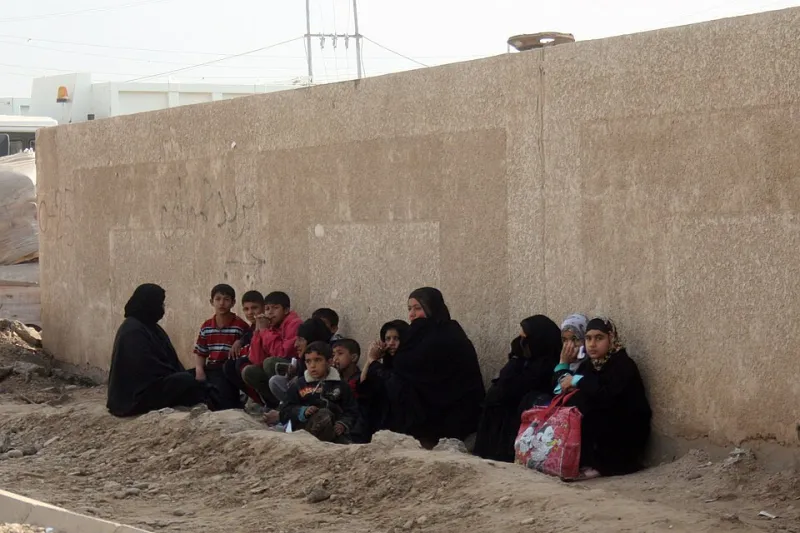
Photo: Sgt. Brad Willeford, Public domain, via Wikimedia Commons
Umm Hassan does not have a title. She holds no elected office, leads no registered organization, and would not appear on any list of Iraq's influential political figures. She is a 44-year-old mother in a working-class district of Baghdad who, over the past four years, has become the person her neighbors call when the water stops running, when a son is detained at a militia checkpoint, or when the local school has not received its promised renovation funds. Her network — built through years of school committees, neighborhood WhatsApp groups, and quiet mediation — reaches several hundred households. Her influence on the daily texture of political life in her district almost certainly exceeds that of the area's elected council representative.
Her story is not unusual. Across Iraq, women occupying similarly informal roles have become the connective tissue of communities navigating an absent or predatory state. They are not a movement in any organized sense. They are something potentially more resilient: a distributed infrastructure of civic engagement that has developed precisely because formal channels have failed.
The Structural Exclusion That Created an Alternative
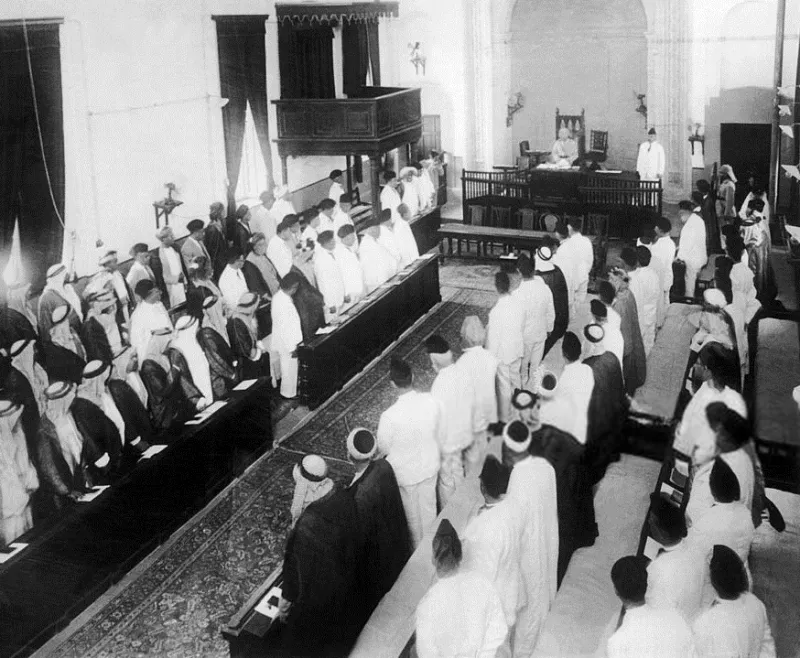
Iraq's formal political system has not been entirely closed to women. A parliamentary quota mandates that at least 25 percent of seats be held by female legislators — a provision that was itself the product of sustained advocacy and international pressure following the 2003 invasion. On paper, Iraqi women have more formal political representation than many of their regional counterparts.
In practice, the quota has produced a form of representation that many Iraqi women activists describe as largely symbolic. Female parliamentarians are frequently affiliated with the same party machines and patronage networks that dominate their male colleagues' careers. They are, in many cases, selected by party leadership rather than elected by constituency mobilization, and their legislative priorities tend to reflect party interests rather than women's advocacy agendas. The quota created female faces in the parliament without fundamentally altering the distribution of power.
Outside the parliament, the barriers are more acute. Militia culture, which has become deeply embedded in Iraqi political and social life since 2014, is overwhelmingly masculine in its organization and ethos. Tribal mediation structures — which remain significant in dispute resolution across much of the country — historically privilege male elder authority. Religious institutions that shape social norms in many Iraqi communities are male-dominated across sectarian lines.
The result is a formal political landscape that women have largely been excluded from shaping — which has, paradoxically, left them free to build something else entirely.
Organizing Through the Channels That Remain Open
The organizing strategies that Iraqi women have developed operate through the institutions and networks that remain accessible: schools, where mothers' involvement is socially sanctioned; healthcare facilities, where women's presence as caregivers creates community; religious and charitable networks, which provide organizational infrastructure and social legitimacy; and, increasingly, digital platforms that allow coordination across geographic and social boundaries.
The 2019 Tishreen protest movement, which drew millions of Iraqis into the streets, provided a visible demonstration of women's organizing capacity. Female protesters were not merely participants; in numerous documented cases, they served as frontline negotiators when security forces threatened violence, exploiting the social inhibition around harming women to create protective space for the broader protest movement. Women ran first-aid stations, coordinated food and supply chains for protesters, and maintained communication networks when male organizers were detained or targeted.
The militia violence that eventually suppressed the movement killed and injured women alongside men. But the organizational skills and networks built during that period did not dissolve when the street protests subsided. They went back indoors — into living rooms, community centers, and encrypted messaging groups — where they have continued to develop.
The Mothers of the Disappeared
No dimension of Iraqi women's informal political organizing is more morally urgent, or more systematically ignored by international observers, than the networks formed by families — predominantly mothers and wives — of men killed or forcibly disappeared by militia violence.
Since the consolidation of the Popular Mobilization Forces and the associated expansion of militia power across Iraqi territory, documented cases of enforced disappearance, extrajudicial killing, and targeted assassination have accumulated into the thousands. The families of victims, operating in an environment where formal legal recourse is effectively unavailable and public accusation is physically dangerous, have developed support and advocacy networks that function as a form of distributed truth-keeping.
These networks share information about disappearances, document cases in formats that can eventually be submitted to international human rights bodies, provide mutual support to grieving families, and, in some instances, coordinate quiet pressure campaigns against specific perpetrators through community relationships. They operate below the threshold of visibility precisely because visibility would invite retaliation.
For American human rights organizations and State Department officials attempting to document militia abuses, these networks represent both a critical information resource and a constituency that U.S. policy has largely failed to protect or support.
Why Washington Keeps Missing This
The persistent underestimation of Iraqi women's political influence by American observers reflects several compounding analytical failures.
The first is institutional. U.S. diplomatic and intelligence engagement in Iraq has historically prioritized access to formal power — ministers, party leaders, militia commanders, senior clerics. These are, overwhelmingly, men. The information picture that emerges from that engagement systematically underweights the dynamics operating in informal spaces.
The second is conceptual. American frameworks for assessing political influence tend to privilege formal indicators: elected office, organizational leadership, media presence, financial resources. Women's informal organizing in Iraq scores poorly on all of these metrics while exercising influence that those metrics cannot capture.
The third is cultural. Iraq's social conservatism has sometimes been interpreted by outside observers as evidence that women are politically passive — recipients of policy rather than agents shaping it. This misreads the relationship between social conservatism and political agency. Iraqi women have not been passive; they have been operating in spaces that outside observers have not been looking at.
The Long Game
The political impact of Iraqi women's grassroots organizing is not likely to manifest as a sudden electoral breakthrough or a visible shift in formal power distribution. It will manifest more gradually — in the accumulated social capital of communities where women's networks have built trust and coordination capacity, in the long-term documentation of abuses that may eventually reach accountability mechanisms, in the transmission of civic values to a generation of young Iraqis raised in households where political engagement, however informal, was modeled by their mothers.
This is a long game, and its players are largely invisible to the outside world by design. American policymakers who wish to understand Iraq's actual political trajectory — as distinct from the formal political theater visible from the Green Zone — would do well to start paying attention to the architects who work without blueprints, titles, or the protection of institutional power.